


 Back
 Blog


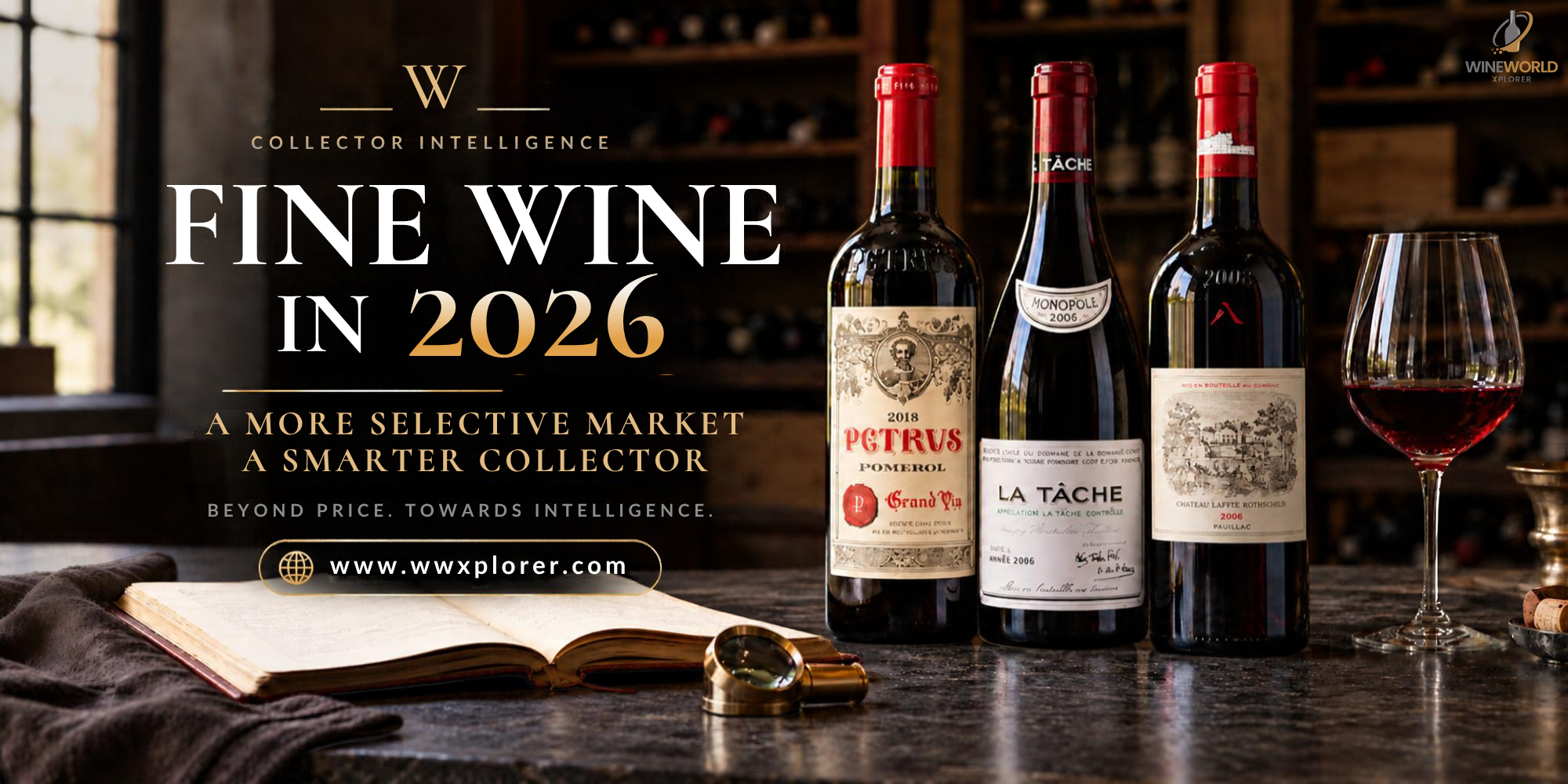
Is the fine-wine market recovering—or simply becoming more selective? For collectors, the more useful question is not whether every price is rising. It is whether a particular bottle, vintage and provenance offer compelling value today.
A market where selectivity matters
Fine wine is not one uniform market. Bordeaux, Burgundy, Champagne and other regions have different release cycles, production volumes, collector communities and drinking windows. Even within one estate, adjacent vintages may command very different prices. Broad market headlines therefore provide context, not a buying decision.
For buyers, a more disciplined environment can create opportunities to revisit producers and vintages that were previously difficult to source. For sellers, it raises the importance of accurate descriptions, realistic expectations and demonstrable bottle history. Neither outcome should be confused with a guaranteed market recovery.
What matters beyond the headline price?
A collectible bottle should be evaluated on more than its label. Consider the exact vintage and format, bottle condition, fill level, label and capsule condition, storage history, original packaging where applicable, provenance documentation and the practical cost of moving it between markets.
Two offers for the same wine can have materially different value when one has clear storage records and the other does not. Price comparisons are most useful when they compare genuinely equivalent bottles, in the same currency and with transaction, tax and logistics costs made clear.
Three questions for collectors in 2026
1. Am I buying to drink, collect or eventually resell?
The right purchase depends on the purpose. A wine intended for a dinner next year should be assessed differently from a case intended for long-term cellaring. Drinking windows, maturity and personal preference matter as much as market sentiment.
2. Do I know exactly what I own?
A useful cellar record connects producer, wine, vintage, format, quantity, location, acquisition cost and condition. Without that foundation, portfolio decisions become guesswork. Good records also help when insuring, valuing, gifting or preparing bottles for sale.
3. Can I compare options across markets responsibly?
An attractive overseas asking price is only a starting point. Availability, currency, duties, handling, storage, delivery and local requirements can change the economics. Collectors should compare the total landed cost and confirm fulfilment arrangements before committing.
From wine information to collector intelligence
This is where Wineworld Xplorer (WWX) and AIZYRA see an opportunity to make collecting more informed. WWX connects fine-wine discovery and cross-border trading opportunities across Hong Kong, the United Kingdom, France and Singapore. AIZYRA is being developed as an intelligence layer to help collectors understand their cellar, explore wine choices and interpret market context.
The ambition is not to replace personal taste with an algorithm. It is to make wine knowledge, ownership information and relevant market choices easier to connect—so collectors can make decisions with greater clarity.
WWX Collector’s Note
Before buying your next collectible bottle, compare like with like: exact vintage, format, condition, provenance, location and full transaction cost. Before selling, make sure your cellar records and bottle photographs are complete. In a selective market, better information is a practical advantage.
Collect with Confidence. Discover with Intelligence.
Fine wine collecting is a journey of discovery, knowledge and personal taste. Explore international fine-wine opportunities through Wineworld Xplorer, and discover how AIZYRA is bringing intelligent insights into the modern collector experience.
Explore Wineworld Xplorer | Discover AIZYRA
Editorial note: This article is general wine-market commentary, not investment advice. Availability and pricing vary by market and over time.
